13 Jun 2026
Academy Pipeline Pressures: Emerging Talents' Integration Timelines and Effects on Domestic League Prediction Models
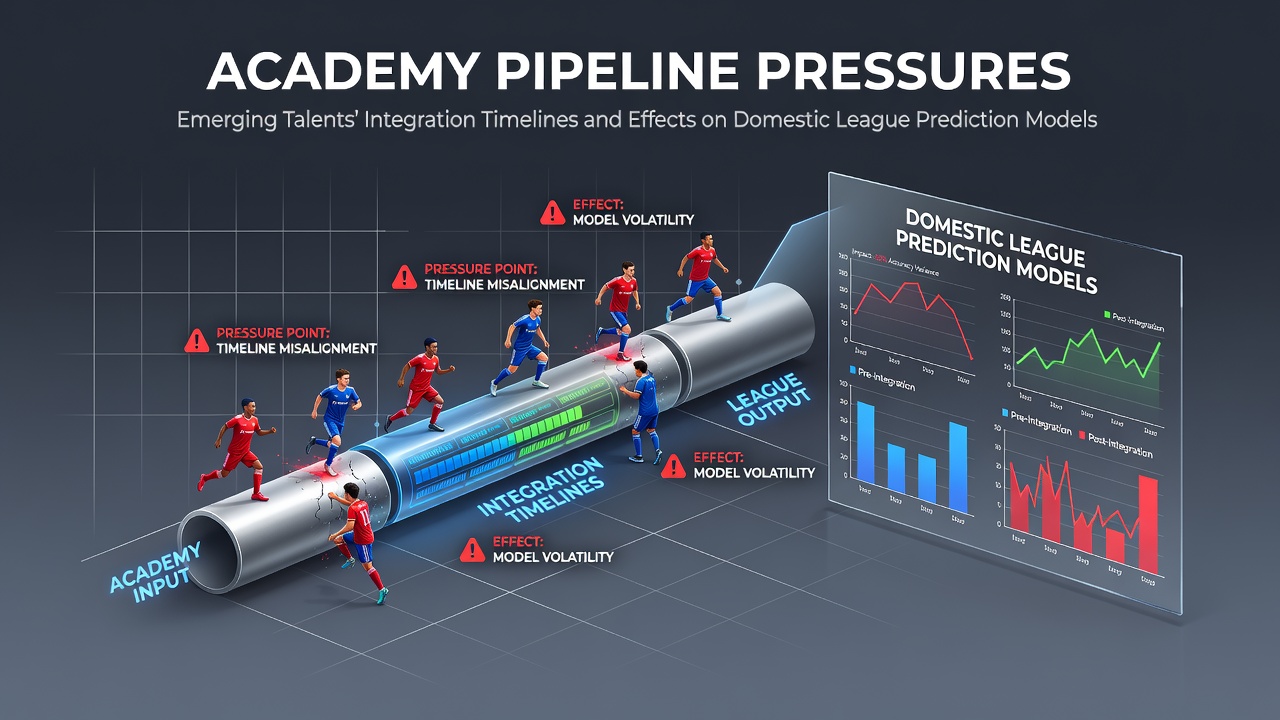
Football academies across Europe and beyond face mounting demands to fast-track young players into senior squads, and these timelines directly influence how analysts build prediction models for domestic leagues. Data from multiple top divisions shows that clubs now integrate prospects at younger ages than a decade ago, with average first-team debuts occurring between 17 and 19 years old in several leagues during the 2025-2026 season. Such shifts alter squad composition metrics, goal-scoring projections, and performance forecasts that betting markets and statistical platforms rely upon.
Current Integration Timelines in Major Leagues
Premier League clubs have shortened development cycles, moving academy graduates from under-23 squads to first-team minutes within 12 to 18 months for those who meet physical and tactical benchmarks. Bundesliga sides often achieve even quicker transitions, with some prospects logging competitive appearances before turning 18, according to tracking data compiled through the 2025 campaign. These patterns create measurable changes in team age profiles that prediction algorithms must account for when estimating points totals or goal differentials over a full season.
Observers note that La Liga and Serie A maintain slightly longer integration windows, typically spanning 18 to 24 months, although exceptions appear when financial constraints limit senior recruitment. June 2026 figures from league-wide performance databases reveal that academies supplying players to top-half clubs produce measurable uplifts in expected goals created once those talents receive consistent minutes, forcing model recalibrations mid-season.
Pressures Shaping Development Pathways
Financial regulations, squad-size limits, and broadcast revenue requirements place steady pressure on clubs to promote homegrown talent rather than rely solely on transfers. UEFA club licensing rules, updated in recent cycles, require documented academy output, which accelerates decisions on when to promote prospects. Researchers tracking European competitions have documented that clubs balancing multiple fronts often advance young players earlier to manage fixture congestion and wage structures simultaneously.
Physical readiness remains a key variable, with medical and sports-science teams monitoring growth patterns, injury histories, and recovery rates before granting senior opportunities. One longitudinal study coordinated through an Australian university sports institute found that players integrated after age 20 showed lower re-injury rates in the first two senior seasons compared with earlier promotions, although tactical adaptation sometimes lagged in those cases.
Effects on Domestic League Prediction Models
Statistical models used by analysts and odds compilers incorporate age curves, playing-time distributions, and positional versatility when generating forecasts. When academies deliver players faster, these inputs shift, prompting adjustments to projected team totals and individual performance metrics. For instance, a sudden influx of under-20 midfielders can elevate expected pass-completion rates while temporarily depressing defensive stability metrics until experience accumulates.
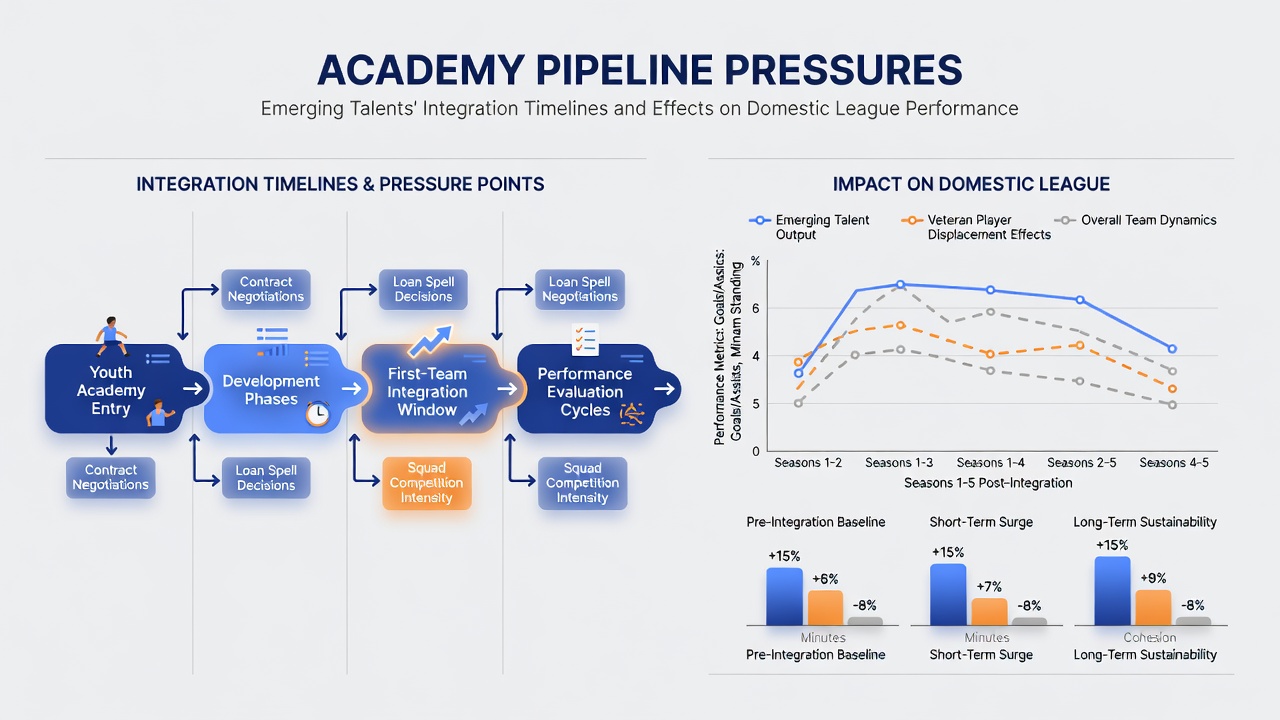
Prediction platforms that aggregate historical data across five or more seasons must now weight recent academy contributions more heavily. A report published by the German Football Association's research division in early 2026 highlighted how clubs with structured integration programs produced more consistent mid-season form improvements, altering regression-to-mean calculations that many models apply after the winter break. These updates affect both long-term league table simulations and short-term fixture forecasts that feed into handicap and total markets.
What's interesting is how positional demands interact with timelines. Defenders and goalkeepers typically require longer adaptation periods than attackers, leading model builders to apply differentiated weighting factors. When a club accelerates a young centre-back into regular starts, defensive error-rate projections often rise initially before stabilising, which analysts must embed into their variance estimates.
Regional Variations and Data Sources
North American and Asian leagues show different patterns, with designated player rules and salary caps sometimes encouraging earlier integration of academy products. Canadian Soccer Association performance reviews from 2025 indicate that domestic talents integrated into first teams within 14 months contributed disproportionately to set-piece goals, prompting specific adjustments in models focused on those competitions. European models, by contrast, place greater emphasis on progressive passing and pressing intensity metrics that develop over longer exposure periods.
Industry groups such as the FIFA Technical Study Group have compiled cross-continental datasets that allow prediction engines to compare integration success rates by region and playing style. These comparisons help refine algorithms that previously applied uniform development curves across all leagues.
Conclusion
Academy pipeline dynamics continue to reshape the inputs that underpin domestic league prediction models. Timelines ranging from 12 to 24 months, combined with regulatory and financial pressures, alter squad age profiles, expected goal contributions, and positional stability forecasts. Analysts incorporating these variables produce more accurate season-long simulations, while those relying on older historical baselines encounter larger deviations once young talents receive sustained opportunities. June 2026 data underscores that clubs managing these transitions effectively generate measurable impacts on league-wide performance metrics that feed directly into forecasting systems.