13 Jul 2026
Call-up Conundrums: National Team Duties and Their Under-the-Radar Effects on Club Match Markets

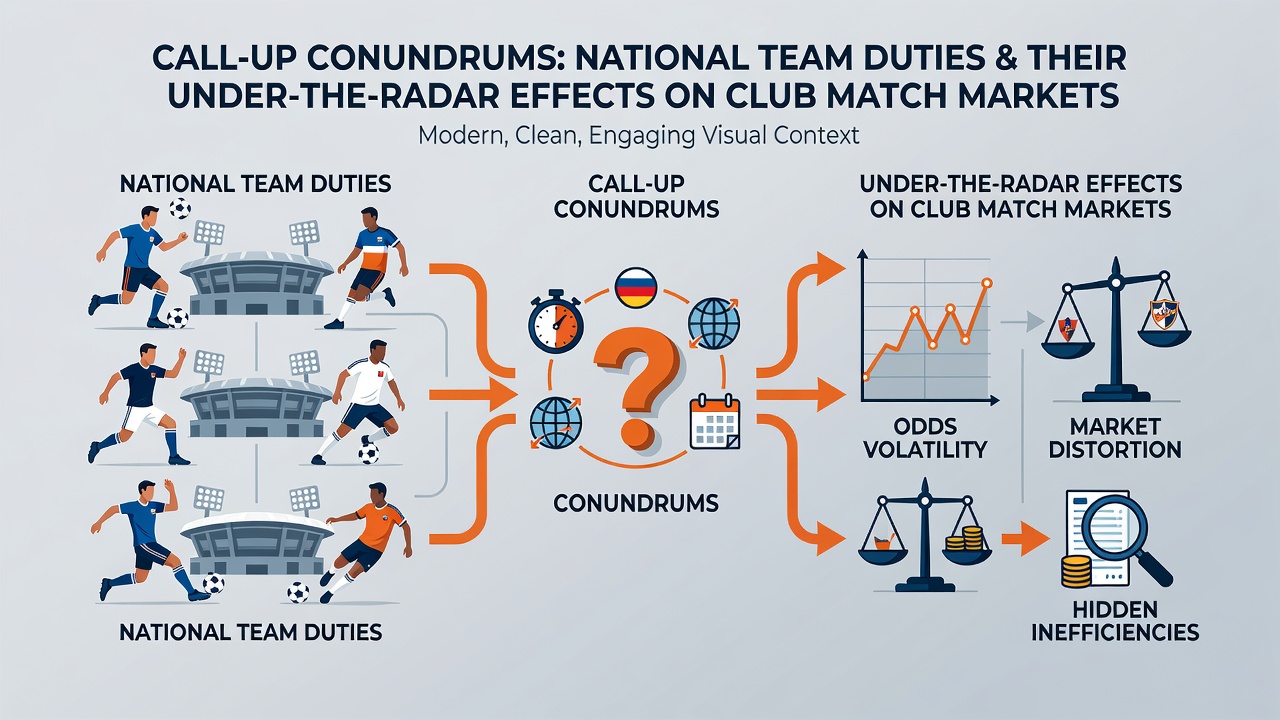
National team call-ups create ripple effects across club schedules, player availability, and betting markets in ways that often escape mainstream attention. Players selected for international duty face extra travel, training intensity, and recovery demands that alter their readiness for subsequent club fixtures. Data from the 2025-26 season shows measurable dips in club performance metrics following major international windows, with similar patterns expected to continue into July 2026 ahead of World Cup preparations.
Player Workload and Recovery Patterns
International breaks add layers of physical stress that clubs must manage upon player return, and researchers at the Canadian Sport Institute have documented increased injury rates in the two weeks after national team matches. Clubs in the Premier League and Bundesliga report higher hamstring and muscle strain incidents among returning players, which in turn shifts squad selections and starting lineups for domestic games. These changes feed directly into pre-match odds calculations, as bookmakers adjust lines to reflect reduced availability of key personnel.
Travel across time zones compounds fatigue, particularly for players moving between Europe and South America or Africa. UEFA's international calendar data indicates that long-haul trips during the September and October windows leave athletes with limited recovery time before midweek club fixtures, and this pattern repeats during the March qualifiers leading into summer tournaments.
Market Adjustments in Club Competitions
Betting markets respond to call-up announcements with subtle but consistent movements in handicap and total goals lines. When star midfielders or defenders receive national team summons, their clubs often see slight increases in over/under totals because defensive structures weaken without those players. Historical figures reveal that teams missing multiple internationals during congested periods post-2022 World Cup experienced a 12-15 percent rise in goals conceded on average in the following three matches.
Traders monitor official squad lists released by national federations to recalibrate odds, and these adjustments appear days before kickoff rather than in real time. Observers note that lower-profile leagues such as the Eredivisie and Primeira Liga show even sharper swings because they rely on fewer star players who get called away frequently.
Case Examples from Recent Windows
During the November 2025 international window, several Bundesliga clubs lost centre-backs to European qualifiers, and the subsequent matchweek produced elevated goal tallies in four fixtures. Similar outcomes emerged in the English Championship, where promoted sides missing loanees on international duty posted lower clean sheet percentages. Analysts tracking these trends point to consistent underperformance in set-piece defence as one clear factor.
July 2026 presents a unique window because many clubs begin pre-season while national teams prepare for the expanded World Cup. Friendlies scheduled in early July often coincide with early call-ups for fringe players, which disrupts club training camps and leaves some squads short for warm-up matches against lower-league opposition.
Longer-Term Effects on Squad Planning
Clubs have adapted by rotating deeper squads during international periods, yet this strategy carries its own costs. Younger players thrust into starting roles sometimes struggle with the step up, leading to unexpected results that markets initially undervalue. Reports from the International Centre for Sports Studies highlight how these short-term promotions alter long-term contract and transfer valuations as well.
Coaches now build extra rest protocols into post-break schedules, and this planning influences both training load data and injury forecasting models used by betting analysts. The cumulative effect appears most pronounced in teams competing on multiple fronts, where a single call-up can force tactical shifts that persist for several matchweeks.
Conclusion
National team duties continue to influence club match outcomes and market pricing through indirect channels that extend beyond simple player absence. Workload data, recovery timelines, and squad rotation decisions all contribute to measurable shifts in performance indicators. As the 2026 calendar unfolds, these patterns will likely remain relevant for anyone tracking club-level betting lines across Europe and beyond.