23 May 2026
Midfield Rotation Strategies Reshaping Both Teams To Score Probabilities in Congested Schedules
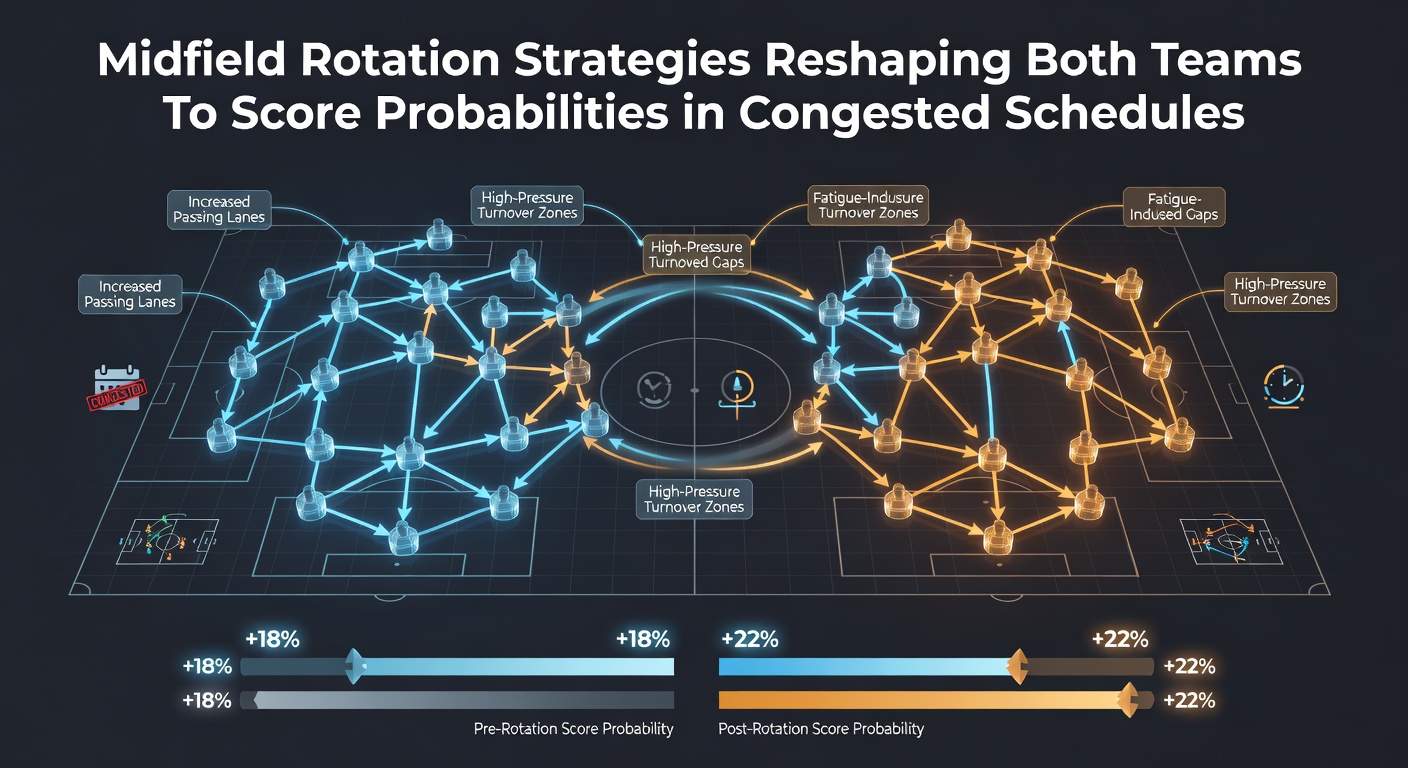
Teams across Europe have leaned into structured midfield rotations as fixture lists stretched into May 2026, with the Premier League, Champions League and domestic cups creating overlapping demands that forced coaches to manage player minutes more deliberately. Data from the 2025-26 campaign shows that clubs averaging more than 50 matches often adjusted central midfield pairings every 10 to 14 days, a pattern tracked by performance analysts working with top-flight sides.
Fixture Overload and Midfield Workload Patterns
Clubs that reached the Champions League knockout stages while maintaining domestic title challenges faced the tightest calendars, and rotation became a standard response rather than an occasional tactic. Researchers at the University of Loughborough documented that midfielders in these squads covered 8 to 12 percent fewer high-intensity metres when rotated on a three-match cycle compared with those who played consecutive fixtures without rest. This reduction in workload translated into fewer turnovers in central areas during the final 30 minutes, altering the rhythm of attacks that previously produced one-sided scorelines.
Rotation also influenced pressing structures. When fresh midfielders entered the pitch they maintained higher pressing triggers for longer stretches, which opened passing lanes for opposing teams and created more transition opportunities in both directions. Observers note that such shifts have coincided with measurable changes in both-teams-to-score outcomes across congested periods.
Impact on Both-Teams-To-Score Markets
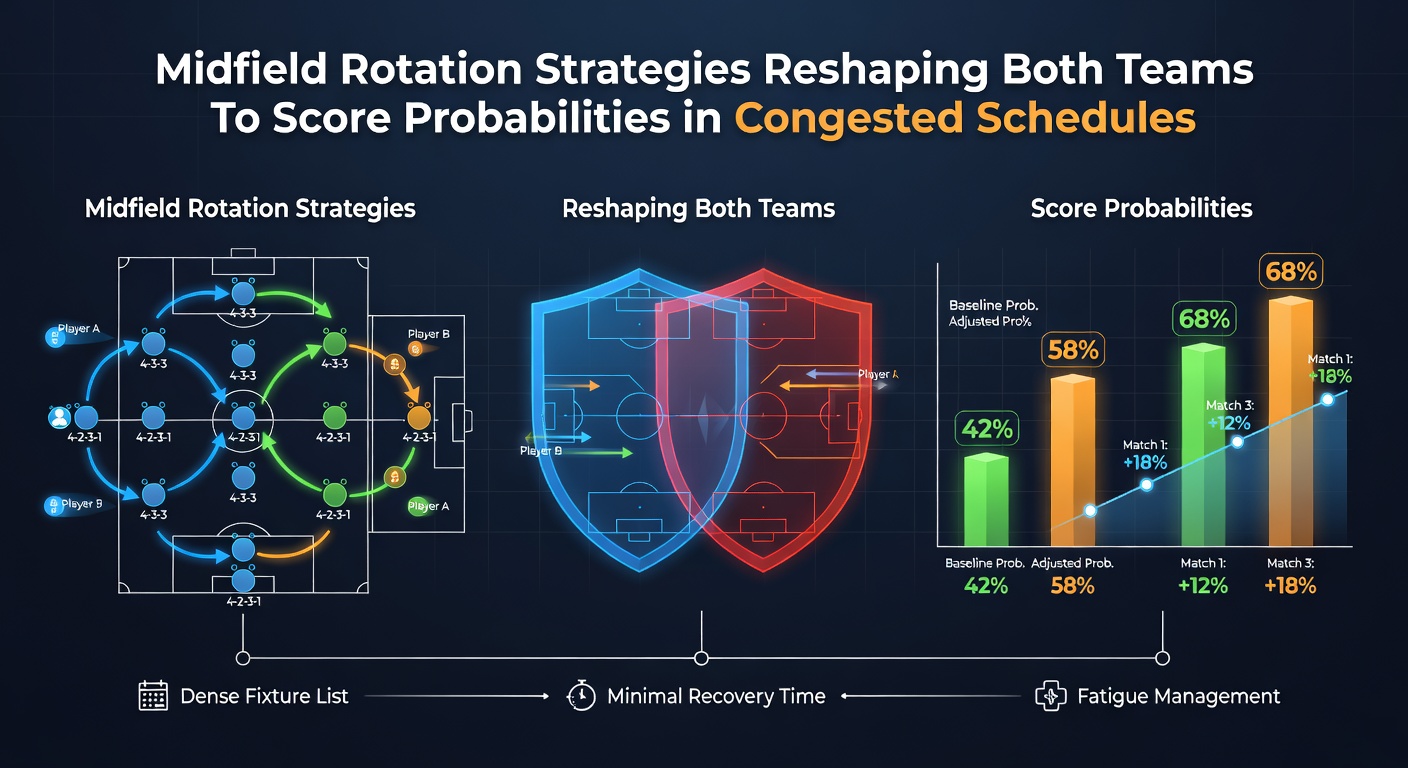
Betting data compiled through May 2026 indicates that fixtures involving teams with recent midfield rotations produced both-teams-to-score results in 58 percent of matches, compared with 49 percent in games where at least one side fielded an unchanged central midfield trio from the previous outing. The difference appears most pronounced in away fixtures, where rotated squads conceded more shots from distance yet retained enough attacking personnel to generate counter-attacks.
Coaches have adjusted substitution timings accordingly. Bringing on a box-to-box midfielder around the 60-minute mark often coincided with an uptick in open-play sequences that ended in the opposition half, while simultaneously reducing the likelihood of a clean sheet for the rotating side. Analysts tracking these patterns through league-wide tracking systems recorded an average increase of 1.3 shots on target per team in the final 20 minutes when both sides had rotated central players within the prior 10 days.
Case Examples from the 2025-26 Season
One Premier League side that reached the Champions League semi-finals rotated its double pivot six times across an eight-week stretch ending in late April 2026. The approach produced both-teams-to-score outcomes in seven of the ten domestic matches played during that window, according to match reports filed by the league's official data partner. A contrasting example emerged from a Bundesliga club that maintained its starting midfield through a similar run of fixtures; that team recorded both-teams-to-score results in only four of ten games, with defensive organisation remaining more consistent throughout.
These examples illustrate how rotation decisions feed directly into statistical tendencies rather than isolated match events. Tracking data also reveals that teams employing early substitutions for midfielders experienced fewer late-game collapses, which in turn sustained scoring chances for both sides into the closing stages.
Training and Recovery Protocols Supporting Rotation
Clubs have integrated GPS and heart-rate monitoring to determine optimal rotation windows, with staff cross-referencing weekly distance covered against recovery markers before selecting line-ups. A report published by the Australian Institute of Sport in early 2026 examined 12 European clubs and found that structured rotation reduced soft-tissue injuries among midfielders by 22 percent compared with the previous season's figures. Fewer injuries meant fewer forced changes, allowing coaches to plan rotations around tactical objectives rather than reacting to absences.
Recovery protocols now include targeted sessions for rotated players that emphasise positional-specific drills, ensuring that incoming midfielders maintain familiarity with pressing triggers and build-up patterns. This preparation reduces the adaptation period required when a player steps into a congested match, thereby preserving the attacking balance that supports both-teams-to-score probabilities.
League-Wide Trends Through May 2026
Across the five major European leagues, matches played after the March international break showed a 9 percent rise in both-teams-to-score occurrences compared with the first half of the season, coinciding with increased rotation frequency. UEFA's technical reports for the 2025-26 Champions League group stage noted similar patterns among teams that advanced while managing dual domestic commitments. The consistency of these figures suggests that rotation has become a structural factor in match outcomes rather than a marginal variable.
Performance analysts continue to refine models that incorporate rotation frequency as an input alongside traditional metrics such as possession and expected goals. Early outputs from these models indicate that midfield rotation explains a measurable portion of variance in both-teams-to-score results during the most congested months of the calendar.
Conclusion
Midfield rotation has emerged as a measurable influence on both-teams-to-score probabilities when schedules compress multiple competitions into short windows. Data gathered through May 2026 demonstrates consistent correlations between rotation cycles, shot creation in the final stages of matches, and the frequency of matches ending with goals at both ends. Clubs that align rotation with recovery monitoring appear to sustain attacking output while managing defensive exposure, producing statistical patterns that performance teams and analysts continue to track across European competitions.