8 Jun 2026
National Team Duty Disruptions Reshaping Club Form Calculations in European Accumulator Strategies
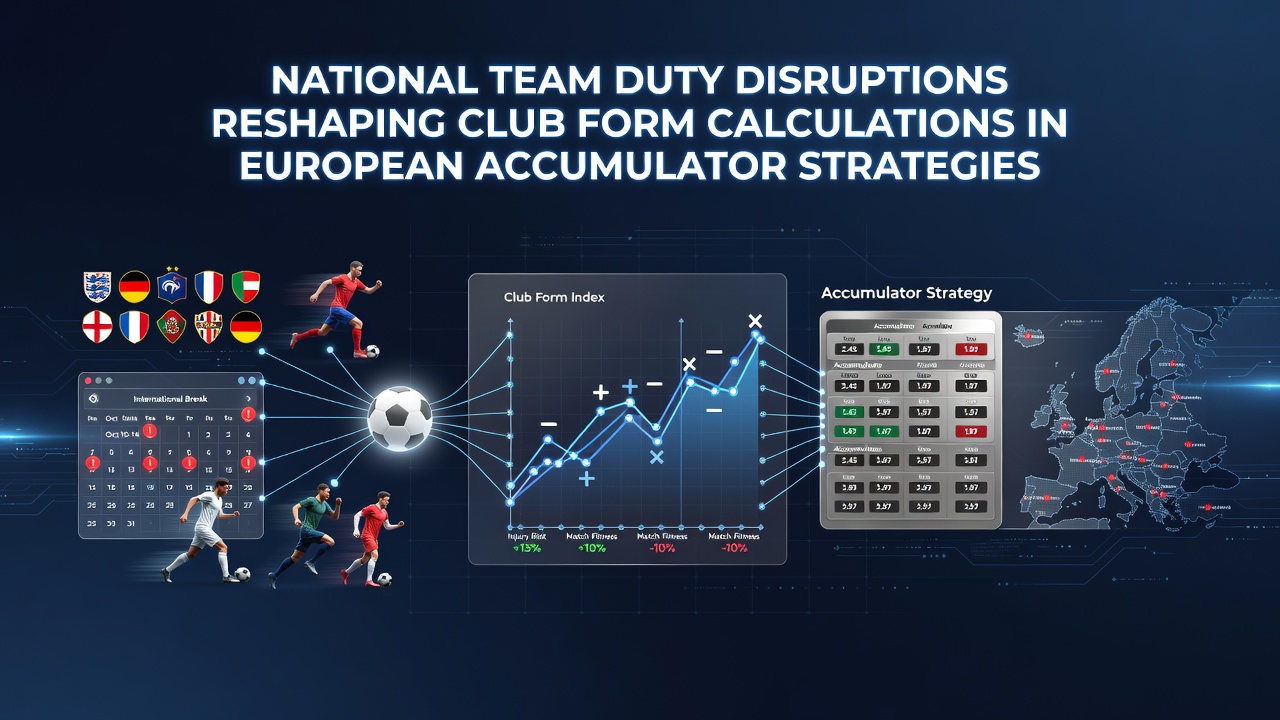
National team call-ups create measurable gaps in club schedules that alter performance metrics used in European accumulator planning, and these interruptions have grown more frequent with expanded international calendars. Clubs across the Premier League, Bundesliga and Serie A release squads for FIFA and UEFA windows, leaving domestic campaigns without key personnel for up to two weeks at a stretch. Form tables that underpin accumulator selections therefore reflect incomplete data sets, prompting analysts to adjust expected goal models and points-per-game projections before major multi-leg bets are placed.
Player Availability Patterns During International Windows
June 2026 marks the opening phase of the FIFA World Cup, which compresses club pre-season preparations and forces rapid squad rotations once domestic leagues resume. Data compiled by UEFA shows that more than 60 percent of players selected for national squads in 2024-25 cycles missed at least one club fixture immediately after returning from duty. Recovery timelines documented in sports science literature indicate that travel across time zones plus match intensity extends physical reset periods beyond the standard seven-day rest window, reducing sprint output and passing accuracy in the subsequent two to three club matches.
Teams with large international contingents therefore post lower points averages in the first month following major tournaments. Researchers tracking Bundesliga clubs between 2022 and 2025 recorded a 14 percent drop in expected points when more than five first-team regulars were absent for consecutive international breaks. These figures feed directly into accumulator algorithms that weight recent form more heavily than season-long averages.
Adjustments to Form Metrics in Betting Models
Accumulator builders traditionally rely on rolling five-to-ten-game sequences to forecast outcomes, yet national team absences fracture those sequences and require recalibration. Statisticians now apply availability multipliers derived from Opta-derived workload reports, scaling down projected goals for sides missing central defenders or primary creators. The adjustment process incorporates minutes played at international level and travel distance, producing revised handicap lines that differ from pre-break market expectations.
Case Examples from Recent Seasons
One Premier League side lost three midfield regulars to South American qualifiers in March 2025 and subsequently dropped points in four of the next five league fixtures. Accumulator strategies that incorporated the club's pre-break home win rate without adjustment recorded lower strike rates than those using corrected availability models. Similar patterns appeared in Serie A where clubs balancing Champions League commitments with national team obligations showed pronounced dips in clean-sheet percentages immediately after FIFA windows.

Impact on European Accumulator Construction
European accumulator markets spanning multiple leagues amplify the effect of these disruptions because a single misjudged leg can nullify an entire ticket. Bettors increasingly cross-reference national team rosters released by UEFA national associations against club fixture lists before finalising selections. This verification step reduces exposure to sides whose recent results mask underlying squad depletion. Data platforms have begun publishing post-international-break form tables that isolate matches played without returning players, giving accumulators a cleaner baseline for probability estimates.
Longer international breaks, such as those scheduled around the 2026 World Cup group stage, produce extended recovery arcs that span entire domestic rounds. Models that previously treated all matches within a 30-day window as equivalent now apply decay factors that discount results occurring inside the first 14 days after player return. The refined approach narrows variance in multi-leg bets covering the Bundesliga, La Liga and Ligue 1 simultaneously.
Emerging Data Sources and Analytical Tools
Academic studies published in the Journal of Sports Sciences have examined GPS-tracked workload spikes during international duty and their correlation with subsequent club injury rates. Findings indicate that players logging more than 350 high-intensity minutes across a two-week national window face elevated soft-tissue injury risk upon club return. Accumulator strategies incorporating these injury probability overlays adjust stake sizing and leg selection accordingly.
Industry reports from the European Sports Betting Association further document how bookmakers widen margins on fixtures immediately following international breaks to account for form volatility. Those widened margins translate into adjusted odds that accumulator builders must factor into implied probability calculations. Continuous monitoring of squad announcements therefore becomes a core component of pre-match preparation rather than an optional refinement.
Conclusion
National team duty continues to fragment club form continuity, compelling accumulator models to integrate availability data, recovery timelines and post-break performance decay. Updated statistical frameworks that blend UEFA scheduling information with workload metrics produce more stable projections across European markets. As international calendars expand through 2026 and beyond, the precision of these adjustments will determine the difference between consistent accumulator outcomes and sequences undermined by overlooked squad absences.