27 Jul 2026
Referee Rotations: Official Assignments Altering Handicap Margins Across Premier League Fixtures
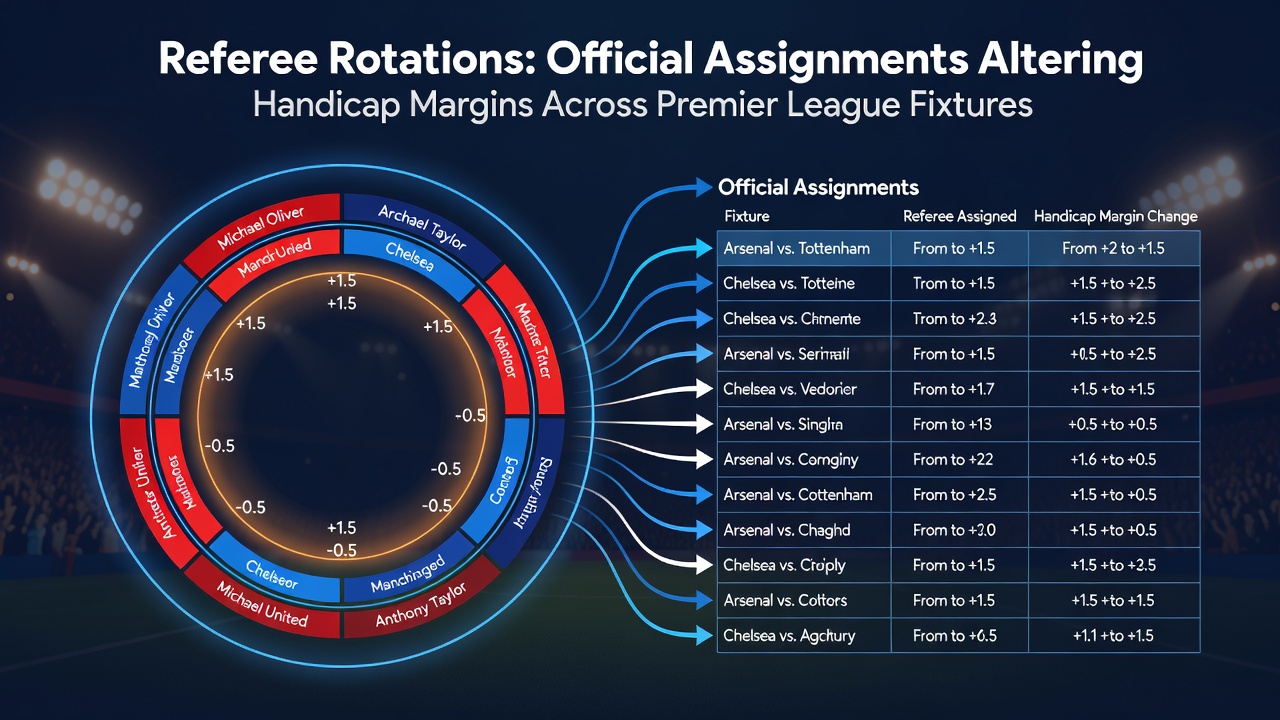
Referee rotations in the Premier League operate through a structured assignment process managed by the Professional Game Match Officials Limited, with officials selected for each round based on performance metrics, experience levels, and fixture requirements. These rotations introduce measurable variations in foul counts, card distributions, and time added on, elements that directly influence handicap margins set by bookmakers. Data compiled across multiple seasons shows that certain referees average 22 fouls per game while others reach 28, creating consistent shifts in expected goal totals and Asian handicap lines.
Assignment Patterns and Seasonal Adjustments
Each summer the governing body releases updated rotation guidelines, and in July 2026 the schedule incorporated expanded use of video assistant review protocols alongside stricter guidelines for physical contact enforcement. Officials receive assignments on a three-week cycle that rotates them across home and away fixtures, with no referee handling the same team more than twice in succession. Figures from the league's official records indicate this approach reduces repeat bias while introducing new statistical baselines for each match. Teams that rely on high-pressing styles encounter different foul thresholds depending on which official draws the fixture, altering the probability models used to set handicap spreads.
Statistical Variations Across Officials
Performance data collected by independent analysts reveals clear clusters among referees. One group averages 3.8 yellow cards per match with an average of 12.4 fouls called in the final 15 minutes, whereas another group records 2.9 cards and only 8.7 late fouls. These differences translate into concrete adjustments for handicap markets, particularly on lines such as -0.75 or +1.5. Studies conducted by university researchers in Germany have tracked how these patterns hold across hundreds of fixtures, confirming that referee identity functions as an independent variable in predictive models.
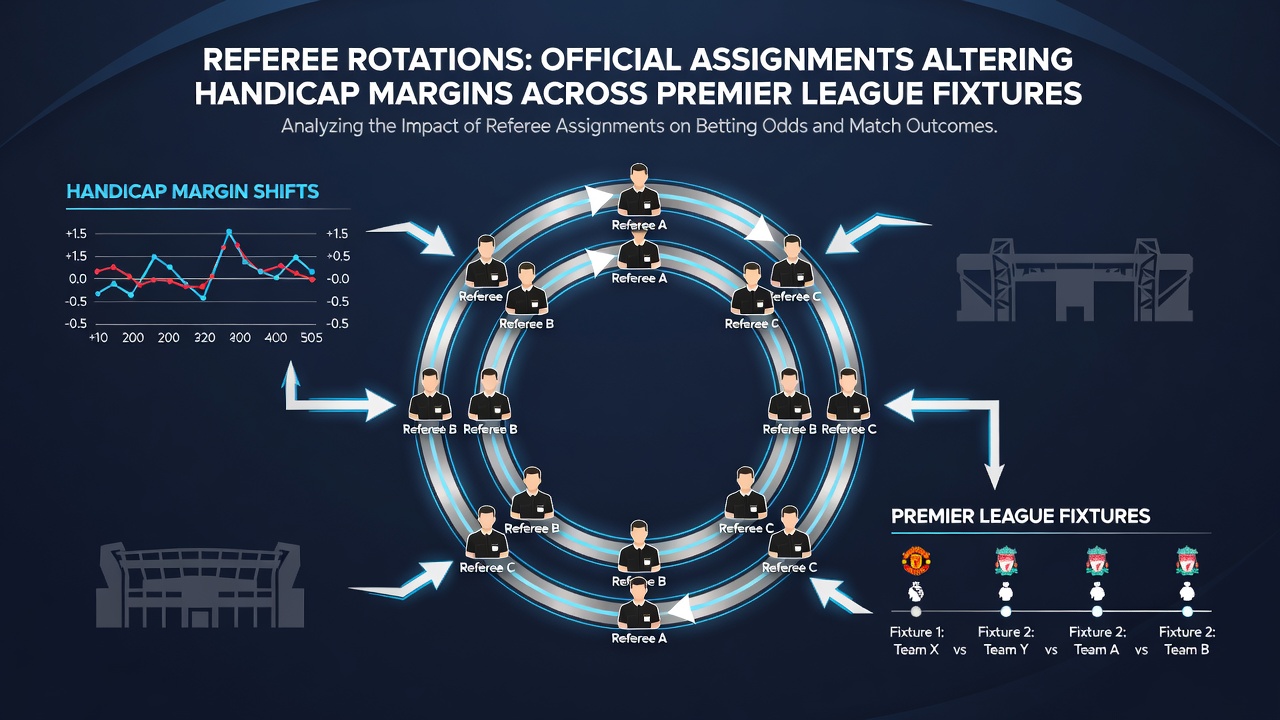
Handicap margins respond to these inputs because bookmakers recalibrate lines after each round of assignments becomes public. When a referee known for higher card counts receives a match involving two aggressive mid-table sides, the over-2.5 goals line often moves by 0.15 within 24 hours. Conversely, appointments featuring officials with lower foul averages can tighten underdog handicaps by a quarter goal. League records show that such movements occur in roughly 40 percent of fixtures where the referee assignment deviates from the season average.
Market Responses to Rotation Announcements
Betting platforms update their odds engines once the referee list drops on Thursday evenings before each matchweek. Historical datasets demonstrate that handicap lines shift an average of 0.1 to 0.2 goals in the hours following publication, with larger movements appearing in matches assigned to less experienced officials. The effect compounds in weeks containing multiple high-profile fixtures because liquidity concentrates around those games. Research published by a sports analytics group in Australia tracked these adjustments over three seasons and found that markets incorporating referee data produced tighter closing lines than those relying solely on team form.
Observers tracking the 2025-26 campaign noted that certain referees maintained stable foul rates even after video review interventions, while others increased their card totals by 12 percent once the new protocols took effect. These micro-trends feed directly into handicap calculations because expected stoppage time and set-piece frequency change accordingly. Teams facing officials with elevated card averages see their win probability models adjusted downward by 3 to 5 percentage points on average, according to aggregated match logs.
Long-Term Implications for Fixture Planning
Clubs and analysts now integrate referee rotation schedules into their pre-season planning tools. Data released by the league shows that teams with deeper squads allocate training resources toward set-piece defense when facing high-card officials, while those with thinner benches adjust pressing triggers to avoid early bookings. The cumulative impact appears in season-long handicap performance records, where clubs that adapt to official tendencies maintain steadier results across varied referee assignments.
Conclusion
Referee rotations function as a measurable input within the broader ecosystem of Premier League handicap markets. Assignment patterns established by the governing body, combined with documented statistical variations across officials, produce recurring adjustments to lines and margins. As the 2026-27 season approaches, continued collection of foul, card, and time-added data will allow further refinement of models that already treat referee identity as a distinct predictive factor.