20 May 2026
The Role of Midweek European Fixtures in Shaping Weekend Domestic Match Expectations and Odds Adjustments
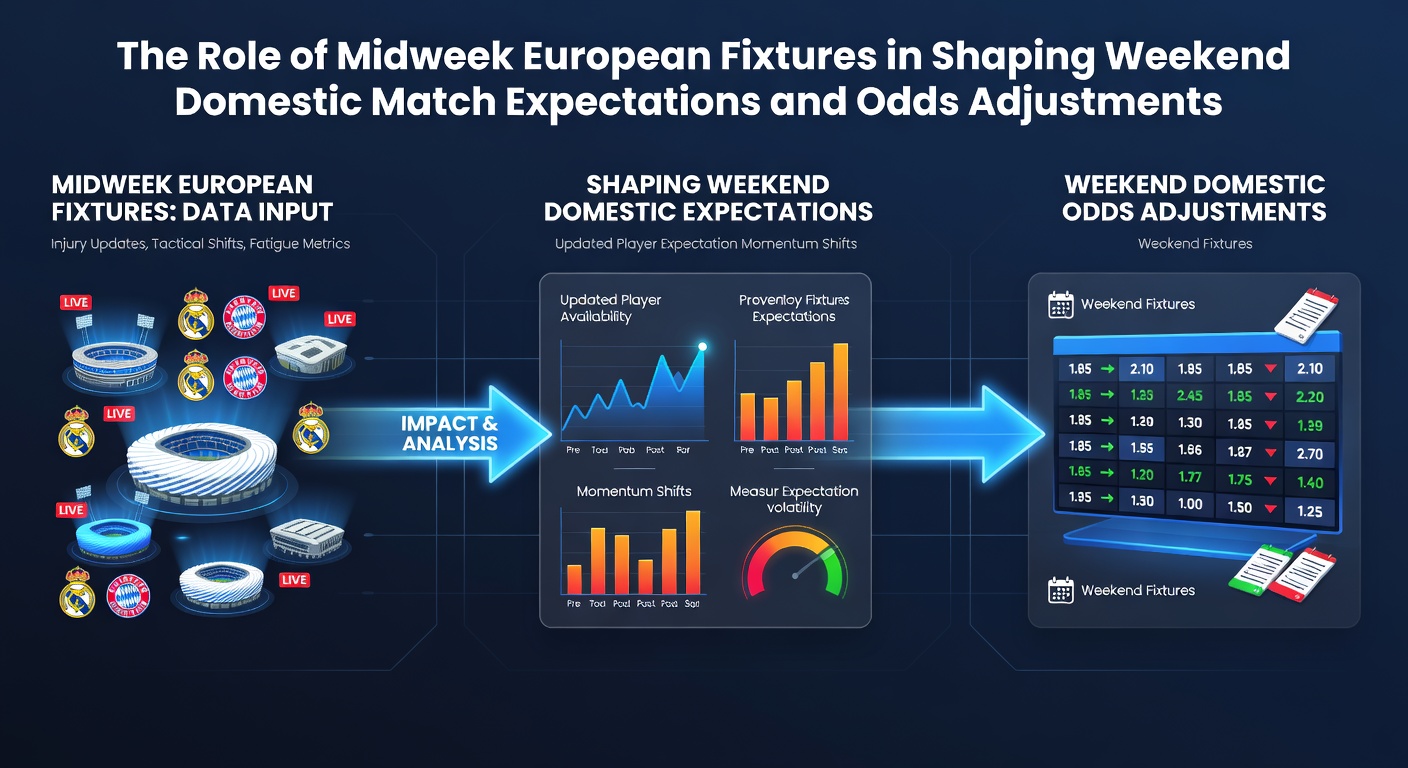
European club competitions place midweek fixtures at the center of a complex scheduling web that directly influences weekend domestic league outcomes and the corresponding betting markets. Teams participating in the Champions League or Europa League often face immediate follow-up matches in their national leagues, where fatigue patterns and squad rotation decisions create measurable shifts in performance expectations. Observers note that these back-to-back demands prompt bookmakers to recalibrate odds based on historical recovery data and current team news.
The Scheduling Challenge in Modern Football
Domestic leagues across Europe coordinate with UEFA calendars so that clubs balance continental ambitions against league priorities, yet the resulting fixture congestion produces predictable effects on player workloads. A side returning from a Tuesday night European away leg typically arrives home in the early hours of Wednesday morning, leaving limited time for full recovery before a Saturday domestic fixture. Research from sports science institutions shows that travel distance and kickoff times compound these recovery challenges, with longer flights correlating to reduced high-intensity running metrics in subsequent matches.
Effects on Player Availability and Performance
Managers respond to midweek European commitments by rotating key personnel, and this tactical choice alters pre-match expectations for the weekend encounter. Data compiled by the CIES Football Observatory indicates that teams with European involvement record lower average pass completion rates and fewer shots on target in domestic fixtures played within 72 hours of their midweek game. Those who've studied workload management across multiple seasons know that substitutes introduced during European ties often start weekend matches, which can dilute attacking cohesion until the regular starters regain rhythm. Yet the same rotation policy protects star players from overload, creating a secondary effect where rested athletes deliver stronger performances once they return to the lineup.
How Betting Markets Respond
Bookmakers track these patterns closely and adjust opening odds for weekend domestic matches accordingly. Lines on match winners, total goals, and Asian handicaps move in response to confirmed team sheets and reported training absences, with markets reacting within minutes of official announcements. Figures from industry reports reveal that European participants receive inflated prices as away sides in domestic fixtures when they have played midweek, while home teams without European distractions attract shorter odds. What's interesting is how live betting during the weekend games further incorporates real-time fatigue signals, such as reduced sprint distances captured by wearable technology.

Take one Premier League club that advanced in the Champions League knockout stages during the 2025-26 campaign; analysts recorded a noticeable lengthening of their weekend handicap line once the midweek result became clear. The same pattern repeats across Bundesliga and Serie A schedules, where midweek European results feed directly into updated probability models used by betting operators.
Notable Patterns Across Recent Seasons
Historical data sets from the past five campaigns demonstrate consistent trends where clubs with midweek European exposure post lower expected goal values in their immediate domestic follow-up. League tables at the halfway point of each season often reflect these dips, with teams dropping points against lower-table opponents after demanding continental nights. And when a European tie extends into extra time, the subsequent domestic match sees even steeper adjustments, as bookmakers widen goal margins and increase over/under thresholds to account for probable player tiredness.
Looking Ahead to May 2026
As the 2025-26 season enters its decisive weeks in May 2026, the final midweek European fixtures will coincide with critical domestic rounds that decide titles, European qualification, and relegation battles. Teams still involved in continental semifinals face particularly compressed schedules, prompting further rotation experiments that alter expected lineups and therefore weekend odds. Observers tracking these late-season dynamics point to increased volatility in both performance metrics and market movements during this period, especially in leagues where multiple clubs remain in European contention.
Conclusion
Midweek European fixtures therefore function as key variables that reshape weekend domestic expectations through documented fatigue effects, deliberate squad management, and rapid bookmaker recalibrations. The interplay between continental and national schedules continues to generate distinct patterns that analysts monitor across Europe, with data from each cycle refining future odds models and performance forecasts.